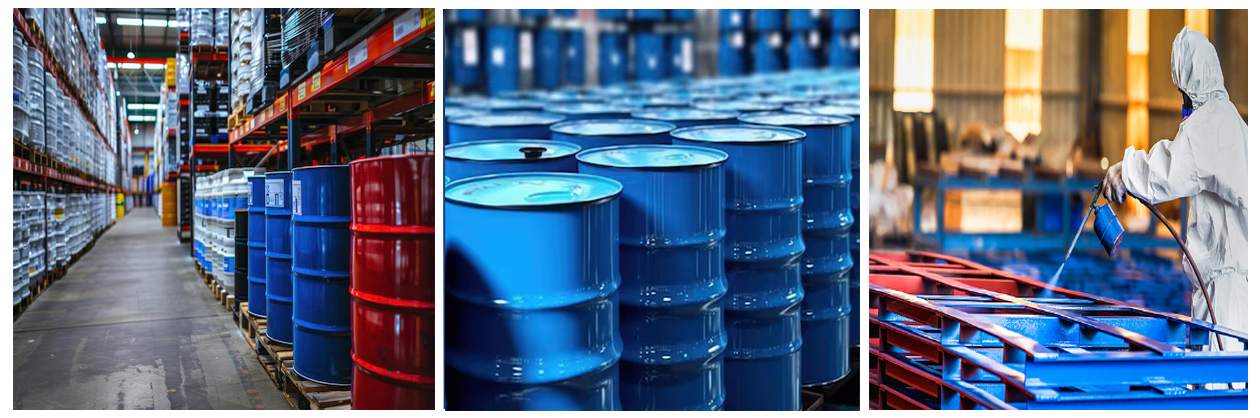
epoxy curing agent
Paint chemicals 2025-03-21
Features
High transparency, high gloss, moisture resistance, white resistance, water resistance, good color stability, moderate hardness, good flexibility
Applications:
Seamstress.
Introduction to Epoxy Curing Agents
Epoxy curing agents are essential components that react with epoxy resins to form cross-linked, thermosetting polymers. The choice of curing agent significantly impacts the final properties of the cured material, including mechanical strength, thermal stability, and chemical resistance.
Types of Epoxy Curing Agents
| Type | Examples | Reaction Mechanism | Curing Temp. | Key Characteristics |
|---|---|---|---|---|
| Amines | DETA, TETA, IPDA, Anhydrous amines | Nucleophilic addition | RT – 120°C | Fast cure, high strength, but brittle |
| Polyamides | Versamid, Ancamide | Polycondensation | RT – 100°C | Flexible, good adhesion, low toxicity |
| Anhydrides | Phthalic, Hexahydrophthalic | Ring-opening polymerization | 100 – 200°C | High Tg, low exotherm, long pot life |
| Phenolics | Novolacs, Resoles | Condensation | 150 – 200°C | High thermal/chemical resistance |
| Catalytic | BF3. Imidazoles | Homopolymerization | 50 – 150°C | Latent curing, controlled reactions |
Selection Criteria for Curing Agents
| Factor | Considerations |
|---|---|
| Curing Temperature | Room temp (amines) vs. elevated temp (anhydrides) for optimal crosslinking. |
| Pot Life | Amines (short) vs. anhydrides (long) – affects processing time. |
| Mechanical Props. | Amines (rigid) vs. polyamides (flexible) – choose based on application needs. |
| Chemical Resistance | Phenolics/anhydrides excel in harsh environments (acids, solvents). |
| Toxicity | Amines (irritating) vs. polyamides (safer) – impacts handling safety. |
Applications by Curing Agent Type
| Curing Agent | Typical Applications |
|---|---|
| Aliphatic Amines | Fast-curing adhesives, coatings, and small castings (RT cure). |
| Aromatic Amines | Aerospace composites, high-Tg electrical encapsulants (elevated temp cure). |
| Anhydrides | LED encapsulation, PCB laminates, and high-performance composites. |
| Polyamides | Marine coatings, corrosion-resistant paints, and flexible adhesives. |
| Dicyandiamide (DICY) | Powder coatings, one-component adhesives (latent curing at >150°C). |
Advantages & Limitations
| Curing Agent | Advantages | Limitations |
|---|---|---|
| Amines | Fast cure, high strength | Brittleness, moisture sensitivity |
| Anhydrides | Low exotherm, high Tg | Requires heat, slow cure |
| Polyamides | Toughness, good adhesion | Lower chemical resistance |
| Phenolics | Extreme thermal stability | Dark color, high cure temp |
| Catalytic | Precise control, latent curing | Limited to specific formulations |
Safety & Handling Guidelines
| Parameter | Amines | Anhydrides | Polyamides |
|---|---|---|---|
| Skin Irritation | High (wear PPE) | Moderate | Low |
| VOC Emissions | Low to moderate | Low | Low |
| Storage | Dry, cool, sealed | Dry (hydrolysis risk) | Stable at RT |
Comparison of Key Properties
| Property | Amines | Anhydrides | Polyamides |
|---|---|---|---|
| Cure Speed | Fast | Slow | Moderate |
| Flexibility | Low | Medium | High |
| Max. Service Temp. | 120°C | 200°C | 150°C |
| Cost | Low | Medium | High |